0–XXI
The major arcana
Twenty-two cards outside the suits: the great figures and turning points of a life, from the Fool's first step to the circle closed.
The fifty-six cards of the four suits deal with the weather of ordinary days — work and love, worry and money. The major arcana deal with the climate. They were once simply the trumps of a card game, the picture cards that beat all the others, and in a reading they still outrank the rest: when a major falls, the matter is larger than it looks, or older, or less in your hands.
The Fool's journey
Read in order, the majors tell a story, and the traveller is The Fool, card 0 — the one with no number, who steps off the edge with nothing but trust and walks through every card that follows. Readers often lay the other twenty-one out in three rows of seven.
0 · The traveller
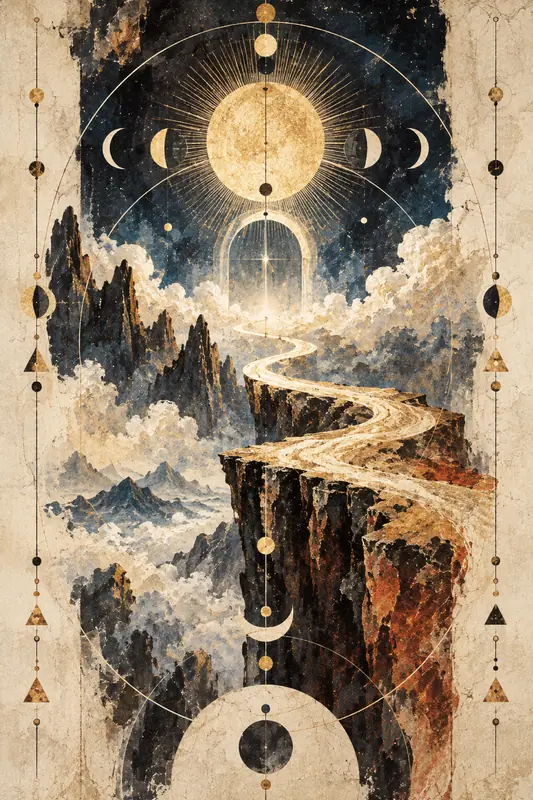
I–VII · The world outside
The first seven are the figures a life meets on its way into the world: the maker and the knower, the mother and the father, the teacher, the beloved, and at last the Chariot — the self that can steer. This row is about learning who you are among other people.
- I · The Magicianwill, skill, and the moment to use them
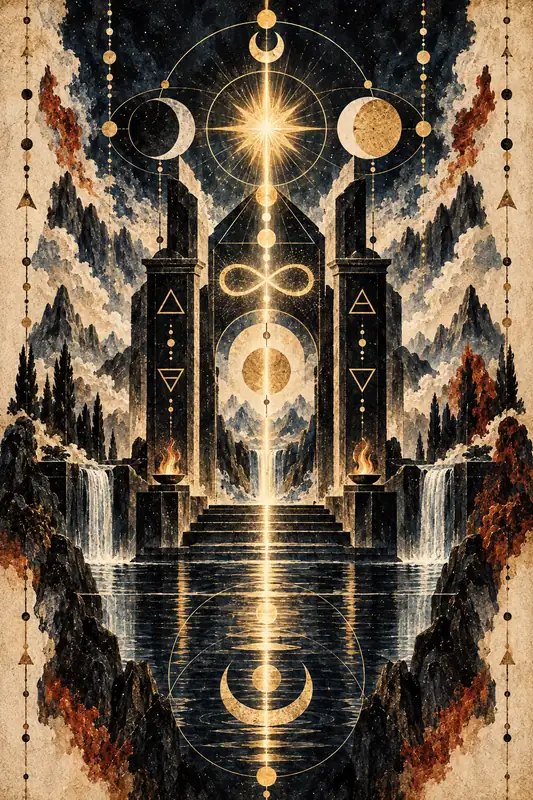 IThe Magician
 - II · The High Priestessintuition, the veil, patience with mystery
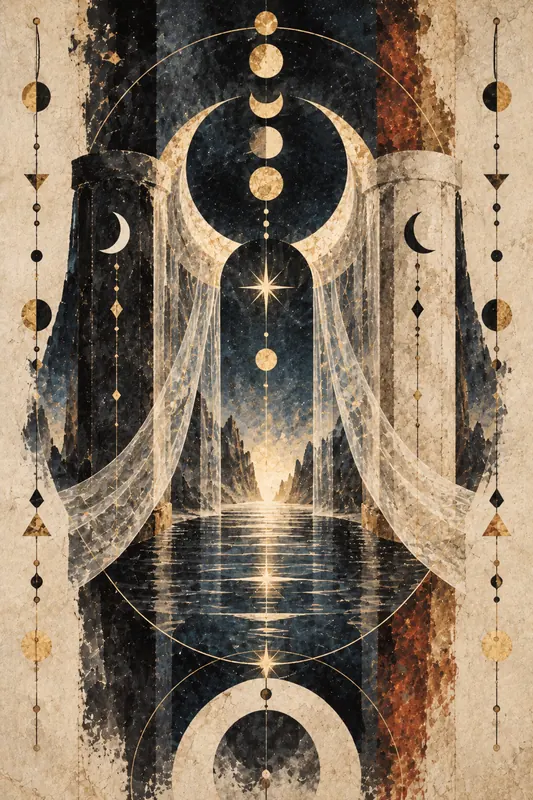 IIThe High Priestess
 - III · The Empressnurture, the body, the fruitful season
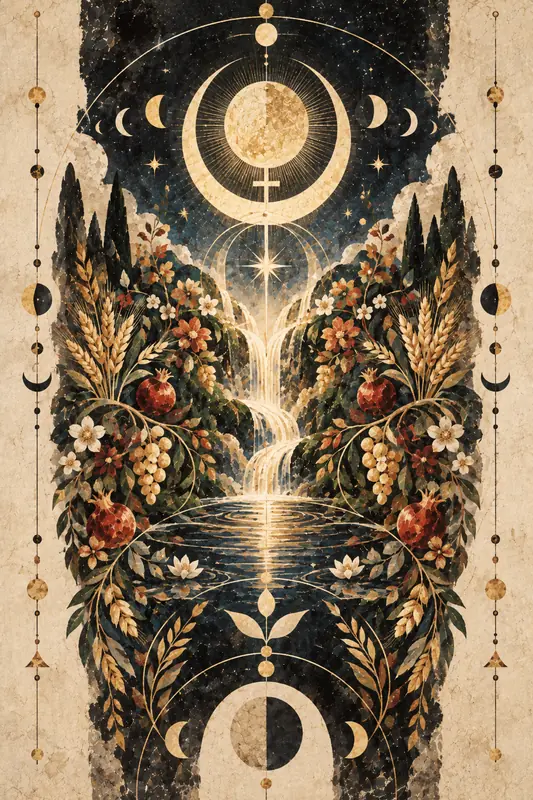 IIIThe Empress
 - IV · The Emperorauthority, boundaries
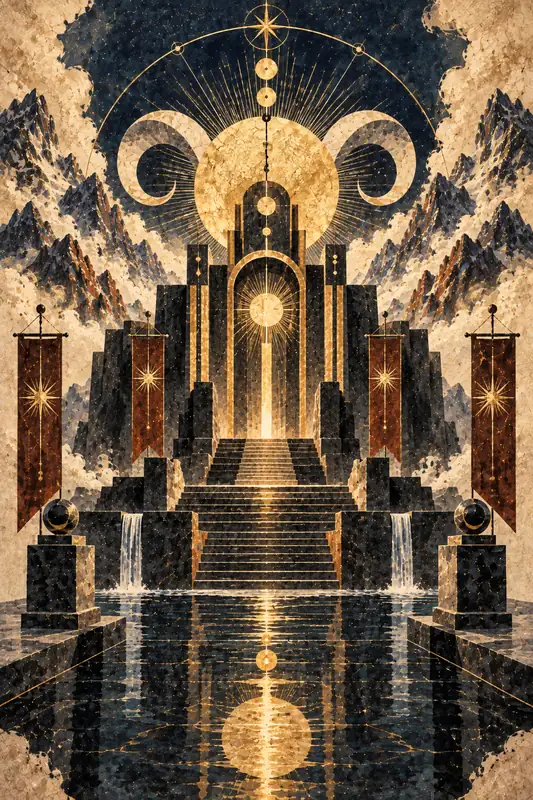 IVThe Emperor
 - V · The Hierophantbelonging, shared faith, something older than yourself
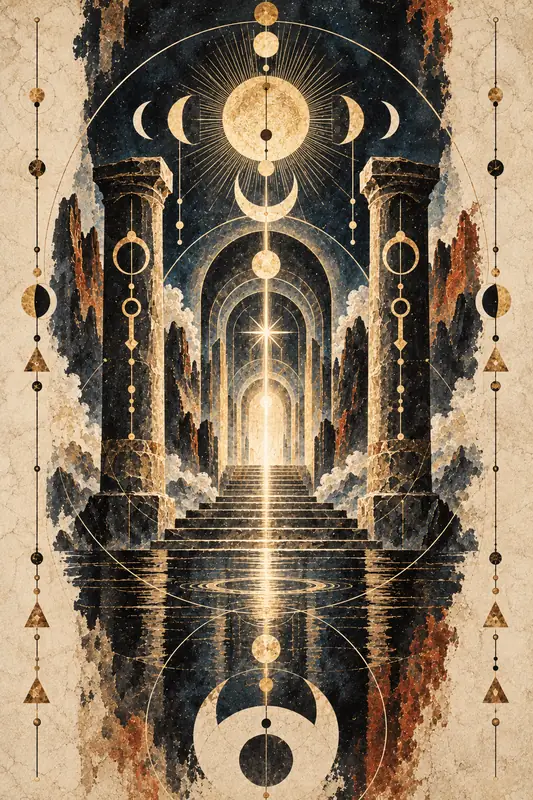 VThe Hierophant
 - VI · The Loversunion, alignment of values, being truly seen
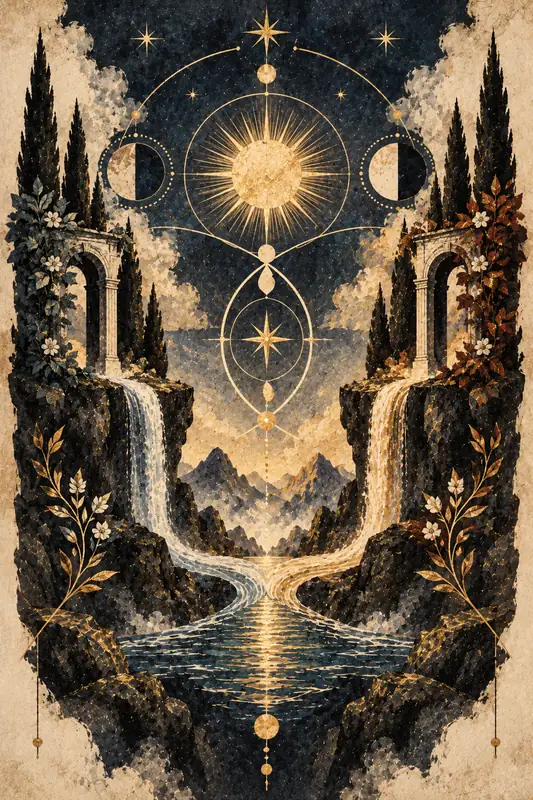 VIThe Lovers
 - VII · The Chariotdrive, victory through discipline
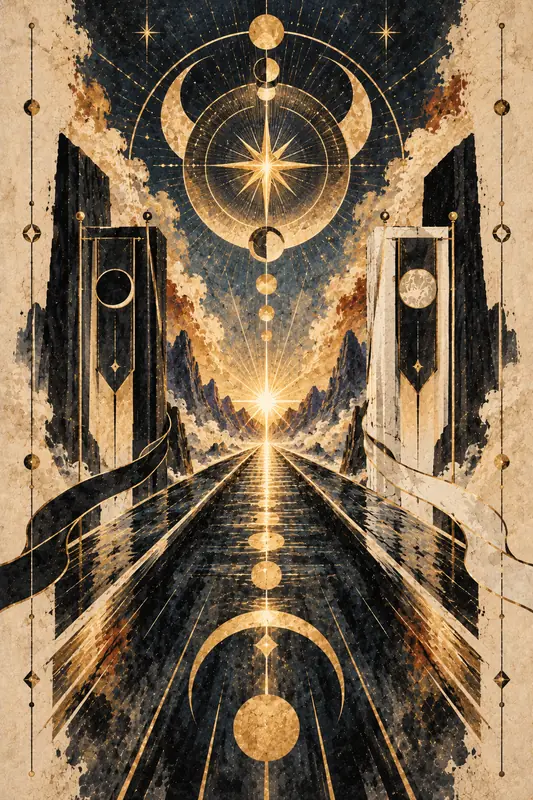 VIIThe Chariot
VIII–XIV · The work within
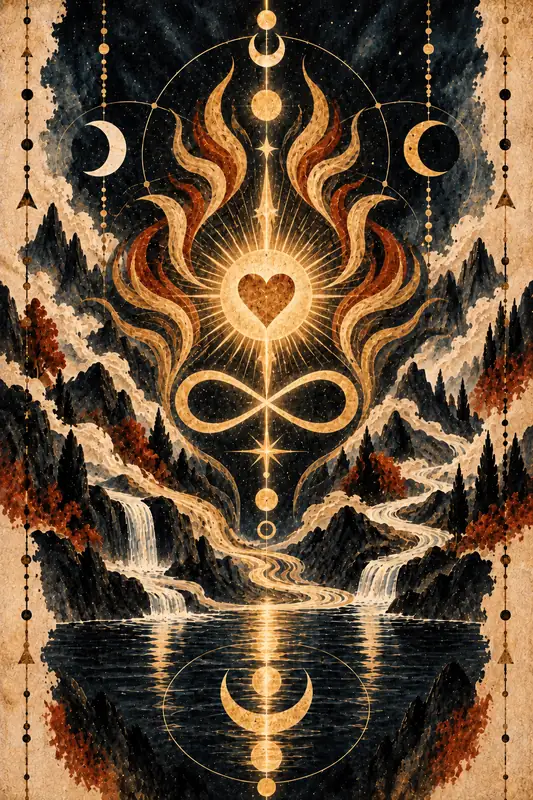
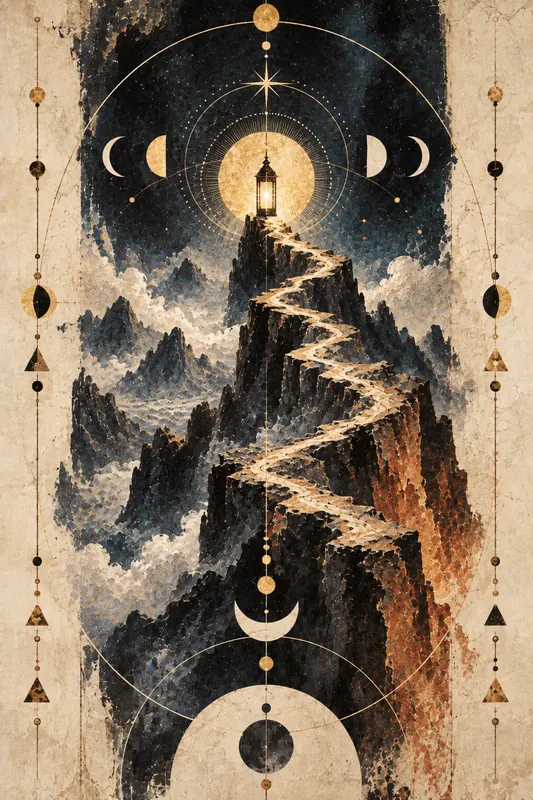
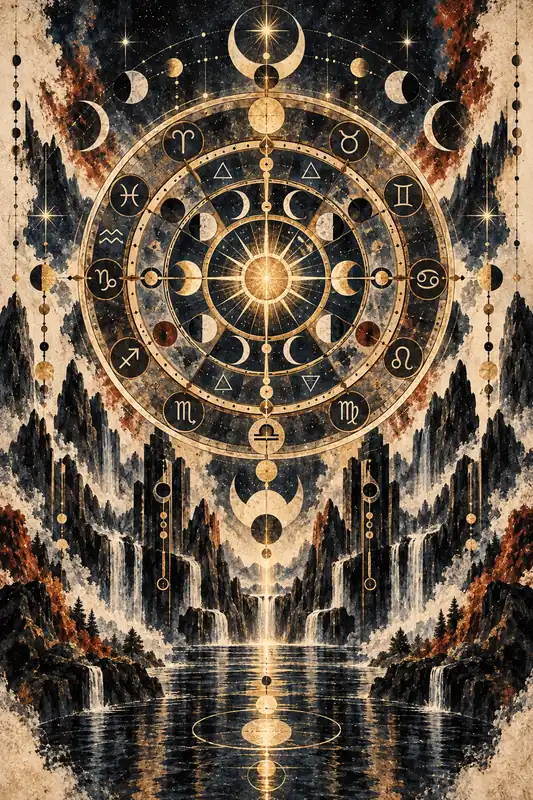
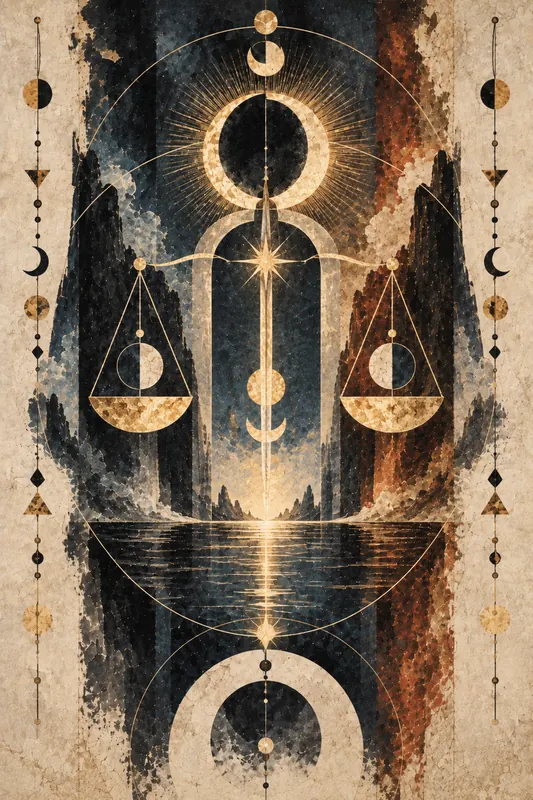
The second seven turn inward. Strength learns gentleness, the Hermit takes his lamp into solitude, the Wheel turns without asking, Justice weighs, the Hanged Man sees the world upside down, Death clears the ground, and Art blends what was opposed. This row is about the self coming to terms with forces it does not control.
- VIII · Strengthcourage that is quiet, patience, inner mastery
 VIIIStrength
 - IX · The Hermitwithdrawal for the sake of truth, wisdom sought alone
 IXThe Hermit
 - X · Wheel of Fortunechange, cycles, luck
 XWheel of Fortune
 - XI · Justicetruth, consequence, a fair accounting
 XIJustice
 - XII · The Hanged Mansurrender, a new angle, the pause that is not a loss
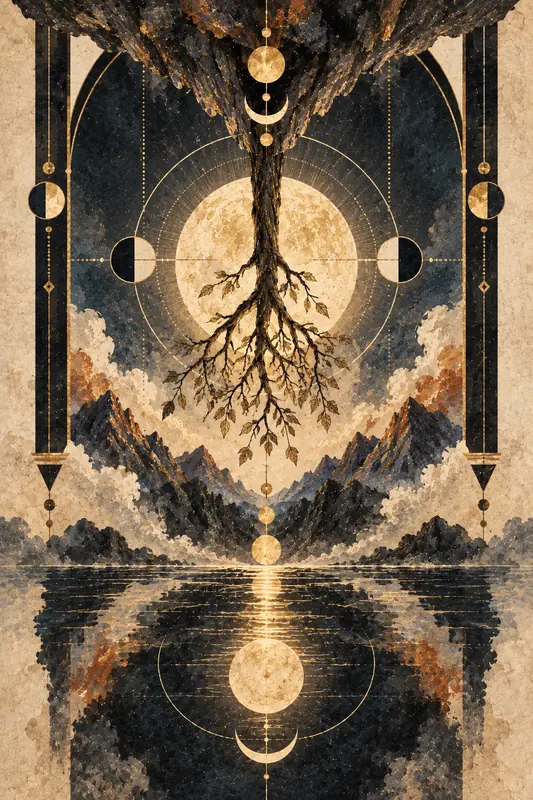 XIIThe Hanged Man
 - XIII · Deathtransformation, release of what is finished
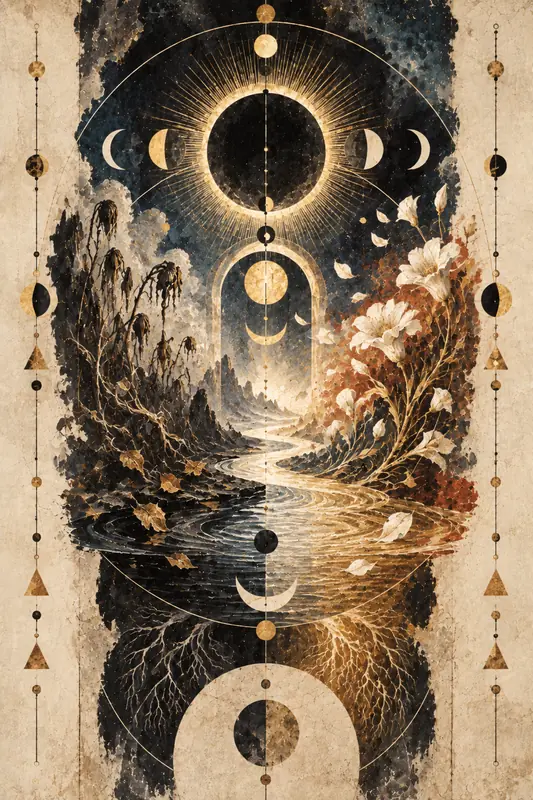 XIIIDeath
 - XIV · Artbalance, moderation, the patient art of blending
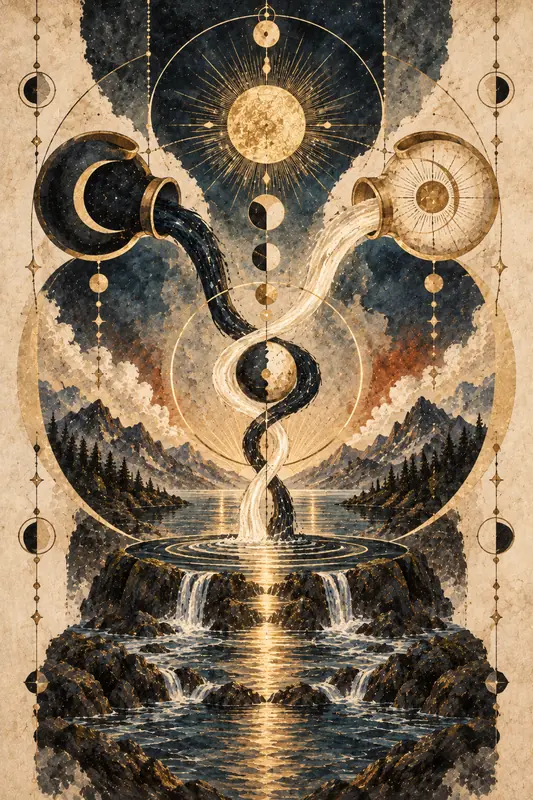 XIVArt
XV–XXI · The great forces
The last seven are larger than any one life: the Devil's chains, the Tower's lightning, then the Star, the Moon and the Sun in turn, the call of Transcendence, and the Universe, where the circle closes. This row is about what binds, what breaks, and what shines through afterwards.
- XV · The Devilattachment, shadow, the comfort in what binds
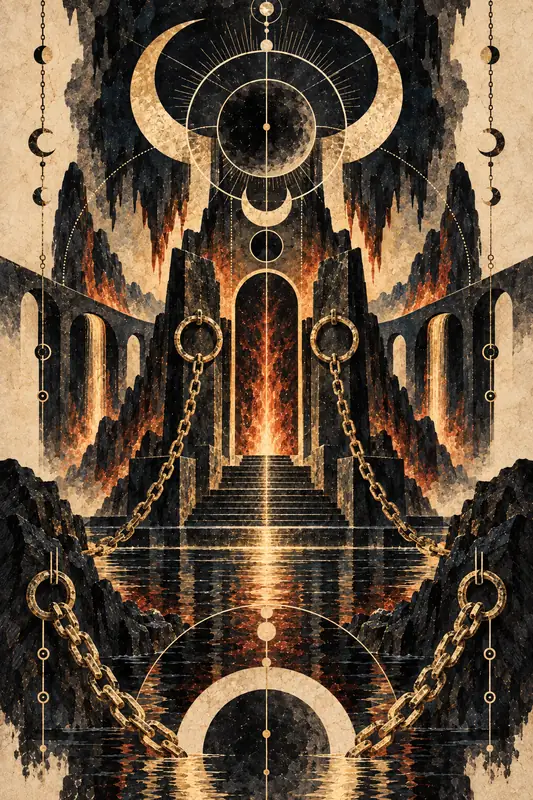 XVThe Devil
 - XVI · The Towersudden upheaval, the truth arriving all at once
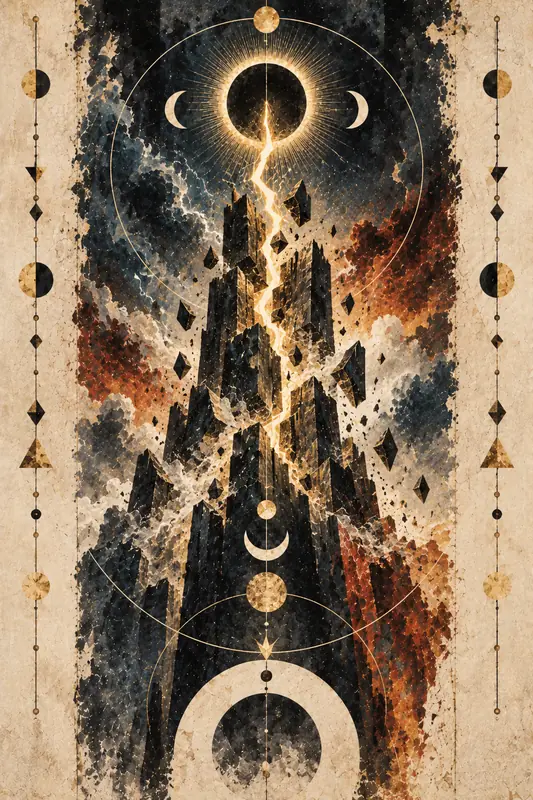 XVIThe Tower
 - XVII · The Starhope, healing, generosity
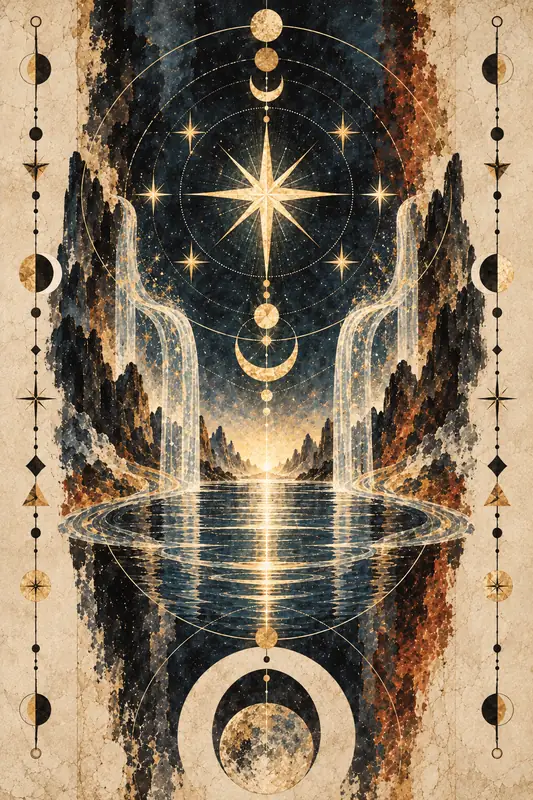 XVIIThe Star
 - XVIII · The Moonillusion, dream, fear
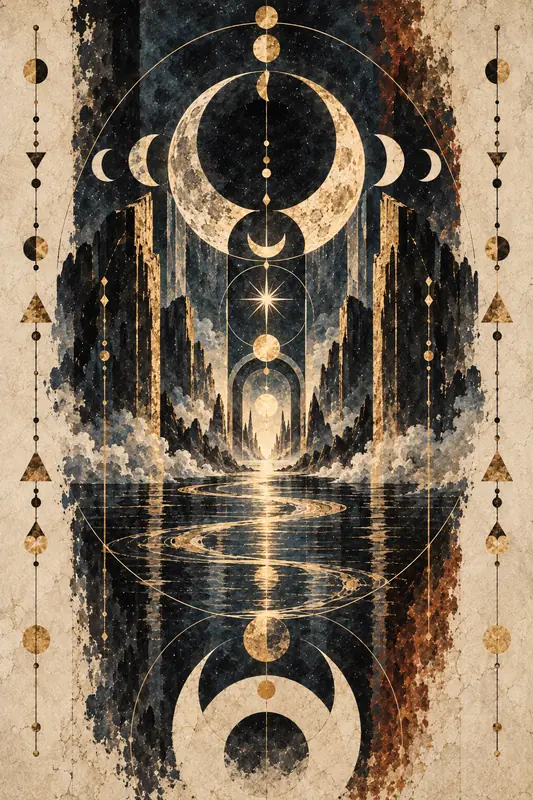 XVIIIThe Moon
 - XIX · The Sunjoy, vitality, success plainly earned
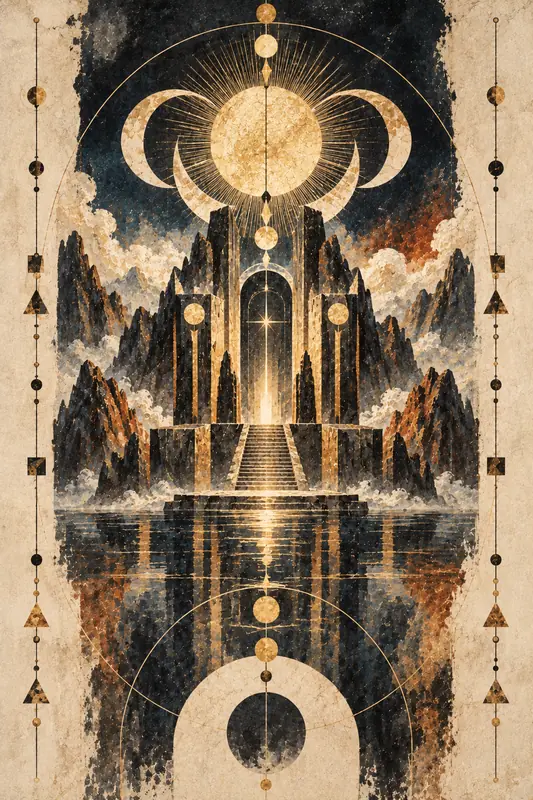 XIXThe Sun
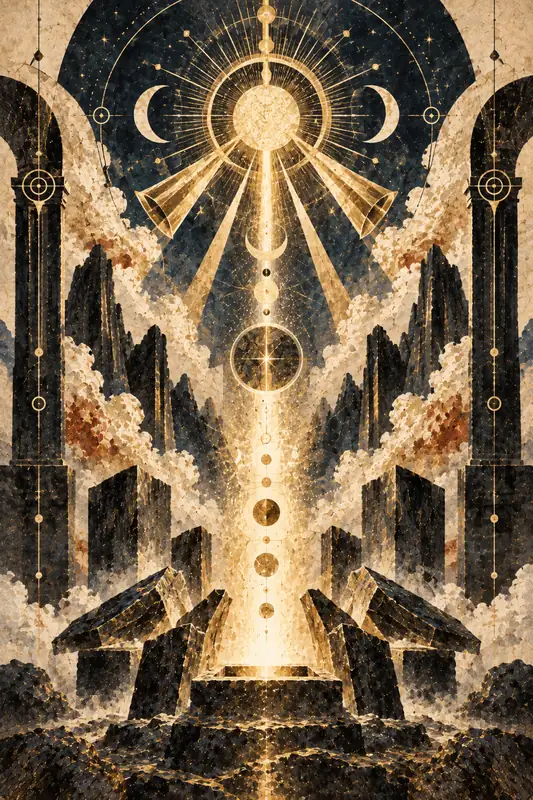
 - XX · Transcendencereckoning, awakening, absolution
 XXTranscendence
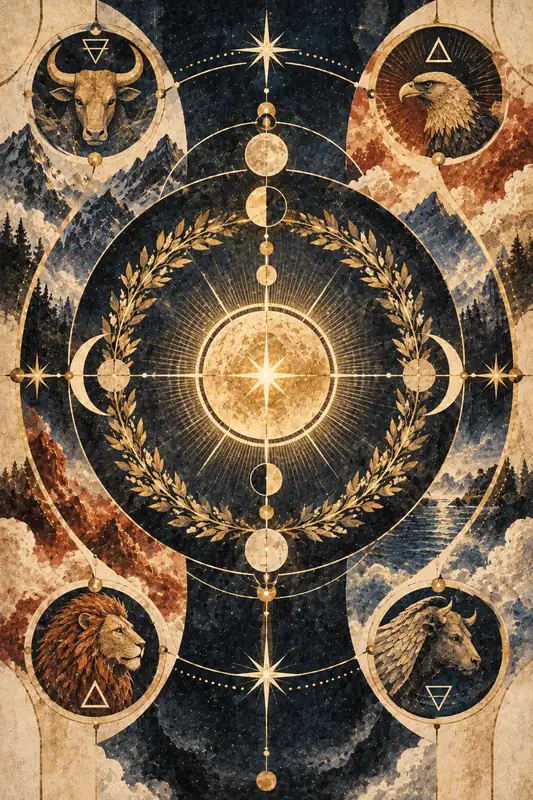
 - XXI · The Universecompletion, integration, the dance at the end of the road
 XXIThe Universe
Our names for them
Most of the majors keep the names every reader knows. Three do not. Art is the card other decks call Temperance, and The Universe is The World — both names Crowley gave them in the Thoth deck, and both closer to what the cards show. Transcendence is our own name for the card called Judgement or the Aeon: less a trial than a rising up. Strength is VIII and Justice XI, as in Waite's deck.
Majors in a spread
A spread with several majors in it is speaking about something that matters — a turning point, a lesson that has been circling for years, forces bigger than the day's choices. A spread with none is about the life you are steering yourself; the answer is more in your hands than it may feel.
Each major also has its place in the heavens — a planet, a sign or an element. See how the majors and the zodiac are paired.
Beyond the twenty-two
The Dream Logic deck has one card that no other deck has: The Observerse, the seventy-ninth. Eyes upon the scene, and behind them, further eyes. Perspective, being witnessed, the sense that your life is seen and accompanied from beyond it.
The suits
- The Suit of Wands — The suit of fire: will, desire, the spark that starts things and the drive that carries them through.
- The Suit of Cups — The suit of water: feeling, love, intuition and the life of the heart.
- The Suit of Swords — The suit of air: the mind, truth, conflict, and the words that cut both ways.
- The Suit of Disks — The suit of earth: the body, work, money, home, and everything that takes time to grow.